• Neurodivergence Gut Health Connection: What the Research Shows (and How It Fits Into My Story)

    Understanding the Missing Link in My Neurodivergence – Autism Gut Health Connection

    One of the most unexpected parts of understanding my own neurodivergence has been realising just how much my gut health has shaped my day-to-day life. Understanding the Neurodivergence Gut Health Connection is something I am just starting to look at. For years I thought my digestive issues, fatigue, and unpredictable appetite were allergies, intolerances, “just IBS,” or “just stress.”

    But learning more about autism and ADHD showed me something important:

    Gut issues aren’t separate from neurodivergence — they are deeply connected to it.

    So many lifelong patterns suddenly made sense:

    • IBS flare-ups after sensory overload
    • Forgetting to eat because hunger cues never appeared
    • Post-meal fatigue triggering shutdowns
    • Gut discomfort creating irritability or looping
    • Overwhelm during meals because of sensory sensitivities

    This understanding lifted years of self-blame and helped me see the bigger picture of how my autistic and ADHD brain works.


    Why the Neurodivergence Gut Health Connection Matters

    Research into the Neurodivergence Gut Health Connection shows GI issues are far more common than most people realise. Research consistently shows autistic people experience gastrointestinal (GI) conditions far more often than the general population — estimates range from 50% to over 80%
    (Source: Autism Research Institute – Gastrointestinal Problems).

    Common difficulties include:

    • Chronic constipation
    • Diarrhoea
    • Abdominal pain and bloating
    • GERD (acid reflux)
    • Food intolerances (gluten, dairy, additives)
    • IBS symptoms
    • Irregular appetite
    • Higher rates of inflammatory bowel disease

    Looking back, many of these had been part of my life for decades — I just didn’t know they were linked to autism.


    The Gut–Brain Axis in Autism: What Research Shows

    Understanding the Neurodivergence Gut–Brain Connection

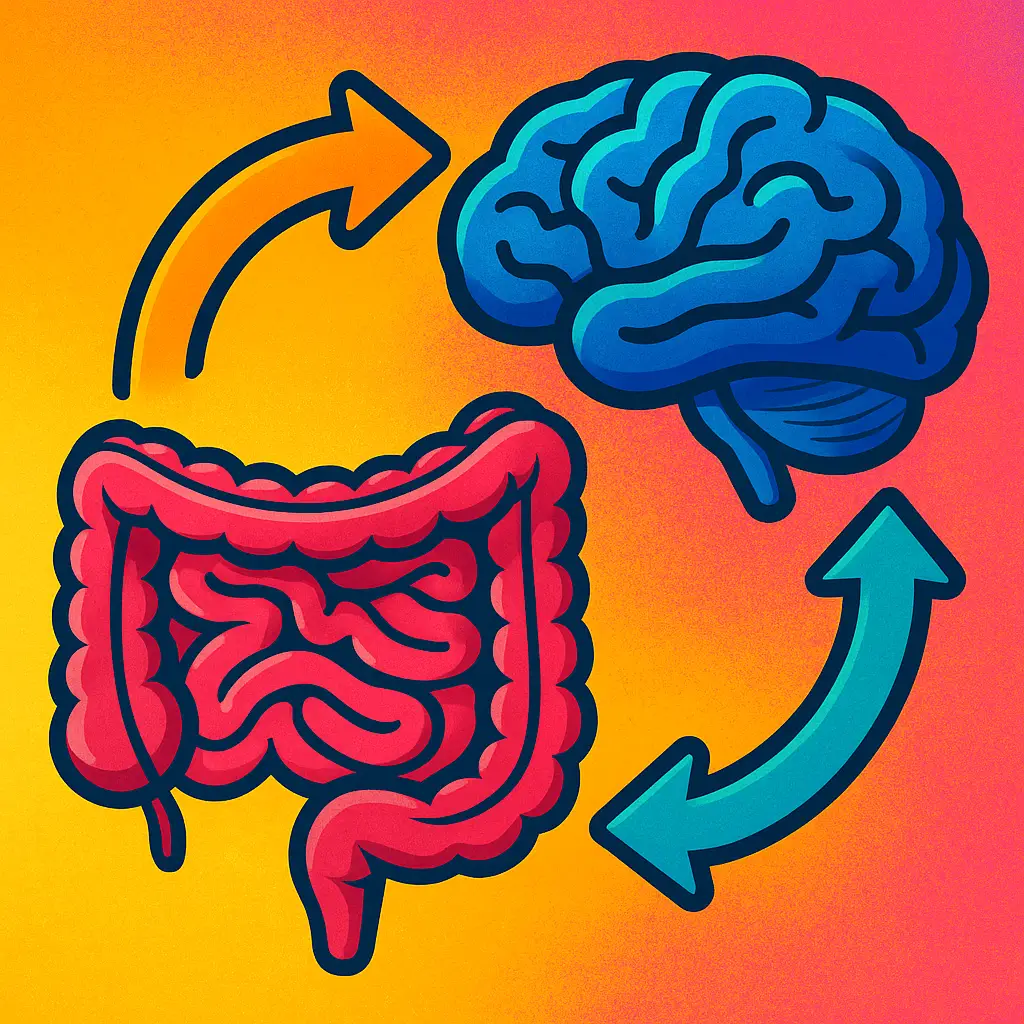
    The gut and brain constantly communicate through nerves, hormones, immune signalling, and the microbiome. This is known as the gut–brain axis
    (Research: Gut–Brain Axis Review – PMC).

    In autistic people, several unique patterns appear again and again.


    1. Behavioural Signs of Gut Pain (Especially When Interoception Is Low)

    Autistic people often have reduced interoceptive awareness
    (Research: Interoception in Autism – PMC).

    So instead of saying “my stomach hurts,” gut discomfort may appear as:

    • Irritability
    • Shutdowns
    • Anxiety
    • Meltdowns
    • Withdrawal
    • Sleep disturbance

    This explains so many moments in my life where I felt “wrong” but couldn’t identify the reason.

    👉 Related post:
    Neurodivergent Looping – Why My Thoughts Get Stuck


    2. Microbiome Differences in Autism

    Research shows autistic individuals often have different gut bacteria (dysbiosis)
    (Source: Microbiome Meta-analysis – PMC).

    Certain bacterial metabolites may influence:

    • mood
    • stress response
    • sensory sensitivity
    • social behaviour
    • immune signalling

    No wonder gut flare-ups often come with emotional and sensory overwhelm.


    3. Immune Activation & “Leaky Gut” Pathways

    Gut dysbiosis can contribute to:

    • chronic low-grade inflammation
    • increased intestinal permeability (sometimes called “leaky gut”)
    • immune signalling that influences behaviour

    (Source: Autism, Immune Function & GI Issues – PMC)


    4. Neurotransmitters Are Made in the Gut

    Around 90% of serotonin — a neurotransmitter affecting mood, appetite, and social behaviour — is produced in the gut.

    When my gut is off, my mood and emotional regulation follow. Now I understand why.


    Connecting the Gut–Brain Axis to My Own Story

    Once I started exploring autism gut health research, things clicked:

    • My “random irritability” often lined up with gut flare-ups
    • Forgetting to eat was interoception + ADHD time-blindness
    • Post-meal exhaustion wasn’t laziness — it was dysregulation
    • My sensory system became more reactive when my gut was inflamed
    • Shutdowns were often pain responses I didn’t recognise

    Understanding this helped me finally treat myself with compassion.


    Supporting the Neurodivergence Gut Health Connection: What Helps

    Image suggestion: pastel or high-contrast infographic with strategies.


    1. Proper Medical Assessment

    Before exploring diets, it’s important to rule out:

    • coeliac disease
    • IBD
    • GERD
    • severe constipation
    • nutrient deficiencies

    NHS guidance on IBS & FODMAP:
    👉 https://www.nhs.uk/conditions/irritable-bowel-syndrome-ibs/treatment/

    NICE guidance:
    👉 https://www.nice.org.uk/guidance/cg61


    2. Tracking Symptoms When Interoception Is Hard

    A simple diary can help identify patterns in:

    • foods
    • stress
    • sensory overload
    • sleep
    • looping
    • bowel movements

    This compensates for reduced internal awareness.


    3. Dietary Interventions — Carefully, Not Restrictively

    Some autistic people try:

    • gluten-free
    • dairy-free
    • additive-free
    • low FODMAP

    But research shows mixed results, and restrictive diets can be harmful.

    About the Low FODMAP Diet

    Low FODMAP is evidence-based for IBS — but only short-term and ONLY with a dietitian because it is highly restrictive
    (Source: NHS Low FODMAP Guidance).

    It may help some autistic individuals with IBS-like symptoms, but it can worsen:

    • ARFID tendencies
    • sensory aversions
    • nutrient intake

    For coaching once you spoken to a GP / Dietitian
    👉 https://nutritionalharmony.co.uk/


    4. Routine and Regulation Before Restriction

    Research supports:

    • predictable meal routines
    • “mechanical eating” every 3–4 hours
    • reducing mealtime sensory overload
    • hydration
    • gentle exercise

    These strategies have helped me far more than any restrictive diet.


    Final Thoughts: My Gut Finally Makes Sense

    Recognising the Neurodivergence Gut Health Connection has helped me understand my body with far more compassion. Knowing this doesn’t magically fix everything — but it finally gave me context.

    Context reduces shame.
    Shame replaced with compassion leads to better self-care.
    Better self-care supports a calmer nervous system — and a calmer gut.

    If your appetite has always been unpredictable, or if gut problems have been dismissed as “stress” or “just IBS,” you’re not alone.

    Your body is communicating — and now we’re learning how to understand it.


    🔗 Internal Link (End of Post)

    If you’re following my journey of late-diagnosed autism, you can read the rest of my series here:
    👉 My Neurodivergent Story – Complete Index

  • Neurodivergent Looping and Me:

    A Missing Piece in Understanding My Neurodivergence

    I’ve recently discovered that a huge part of my experience has been shaped by something called neurodivergent looping — a pattern where my autistic and ADHD brain gets stuck replaying thoughts, emotions, or information. For years I thought it was overthinking, but understanding neurodivergent looping has helped me make sense of so many parts of my life.

    This insight has been one of the most validating discoveries of my neurodivergent journey so far.


    What Neurodivergent Looping Is

    Looping happens when your brain keeps returning to the same thought, emotion, or question because it’s Looping happens when your brain keeps returning to the same thought or emotion because it’s trying to create a sense of safety or closure. Instead of easing anxiety, it creates a stuck, repetitive cycle.

    How neurodivergent looping can show up

    • Mental replaying: going over a conversation, mistake, or decision endlessly
    • “What if” thinking: imagining every possible outcome
    • Emotional replaying: feeling old emotions as though they’re happening now
    • Information loops: researching or analysing something without being able to stop

    Looping is extremely common among autistic and ADHD people — more than many realise.

    If you’re curious about where my journey began, you can read
    ➡️ Part 1: Understanding My Neurodivergence Journey.


    🧠 Why Neurodivergent Looping Happens in Autistic and ADHD Brains

    Looping isn’t a personality flaw. It’s a neurological pattern.

    1. Executive Function Differences

    Difficulty switching mental “tracks” makes thoughts stick.

    2. Need for Closure

    Unfinished thoughts feel unsafe or unresolved.

    3. Anxiety and Overwhelm

    Looping becomes an attempt to regain control.

    4. Burnout or Low Energy

    When the brain is depleted, it defaults to familiar mental patterns.

    The National Autistic Society has written about similar processing patterns
    ➡️ https://www.autism.org.uk/


    💬 My History With Neurodivergent Looping

    More than five years ago, during CBT, I realised I was doing myself a lot of mental harm on my commute. I would replay my entire workday:

    • every conversation
    • every possible mistake
    • every imagined judgement

    By the time I got home, I was exhausted and overstimulated.

    Back then, it was labelled as “overthinking.”
    Now, I know it was neurodivergent looping.

    And it also explains why, even now, I struggle to “put something down” when it’s on my mind — especially at night. My brain simply doesn’t switch tracks easily.

    You can read more about how masking affected me in
    ➡️ Part 4: Unmasking Through Burnout and Loss.


    🧩 Why Neurodivergent Looping Affects Me So Deeply

    The combination of autism, ADHD, and years of masking makes looping especially powerful for me.

    Autistic traits

    • strong need for resolution
    • difficulty shifting attention
    • thoughts feel “unfinished”

    ADHD traits

    • cognitive momentum (“just one more thought…”)
    • loops accelerate at night

    Masking

    • replaying interactions to check for mistakes
    • mental self-monitoring

    Anxiety

    • looping feels like control during uncertainty

    Understanding this has helped reduce so much shame.


    🌙 Neurodivergent Looping and Sleep

    At bedtime, looping is often strongest because:

    • silence removes distractions
    • the loop hasn’t resolved
    • my brain is trying to protect me
    • executive function can’t “close the tabs”

    This reframing has helped me understand why I struggled for so long, instead of feeling like it was a personal failure.


    🌼 Strategies That Help Me Break Neurodivergent Looping

    1. Externalising the Thoughts

    When I’m looping, getting the thoughts out of my head is often the first and most effective step. These are the tools that help me interrupt the loop:

    • Writing a “loop dump” — emptying every repeating thought onto paper or into a notes app so my brain doesn’t feel responsible for holding it all.
    • Voice notes or having a sounding board — saying it aloud helps break the mental cycle. Sometimes that’s with a person, and sometimes even with ChatGPT if I just need a safe space to process.
    • Journalling — this is still a work in progress for me, but writing on my blog has become a surprisingly grounding form of journalling.
    • Naming the loop aloud — simply saying “I’m looping” helps externalise it and reduces the shame or fear attached to it.

    2. Sensory Grounding

    Sensory grounding pulls your attention out of the looping thought and back into your body and the present moment. These strategies work because they interrupt the mental cycle with physical sensation.

    • Cold water

    Cold water activates the “dive reflex,” slowing your heart rate and calming your nervous system. You can:

    • run cold water over your wrists
    • splash cold water on your face
    • hold something cold (like a chilled can or ice pack)

    Helpful explanation:
    https://www.verywellmind.com/dive-reflex-for-anxiety-5214313


    • Weighted blanket

    Weighted blankets provide deep pressure stimulation, which can calm the sensory system and reduce spiralling thoughts. They help your body feel grounded and safe.

    General overview:
    https://www.sleepfoundation.org/best-weighted-blankets/benefits-of-weighted-blankets


    • The 5-4-3-2-1 grounding method

    This method uses your five senses to anchor you in the current moment.
    You gently observe:

    • 5 things you can see
    • 4 things you can touch
    • 3 things you can hear
    • 2 things you can smell
    • 1 thing you can taste

    It’s simple, fast, and works well during looping, anxiety spikes, or sensory overwhelm.

    More information:
    https://www.verywellhealth.com/grounding-techniques-5211505


    3. Naming the Loop

    “I’m looping right now. My brain is trying to solve something that doesn’t have an answer.”

    4. Gentle Structured Distraction

    Structured distraction works best for neurodivergent looping when it has just enough focus to shift the mental track, without being overwhelming.

    This isn’t about forcing yourself to “think about something else” — it’s about giving your brain a safer, calmer task to latch onto.

    Here are the things that work for me:

    • Sorting or organising

    Light, low-pressure organising helps because it has:

    • a beginning and an end
    • predictable steps
    • clear focus
      It might be tidying one drawer, sorting paperwork, organising a bag, or decluttering a single surface.

    • Crafting — in my own way

    Traditional arts and crafts are difficult for me (my dyspraxia means coordination-based or fine-motor tasks can be frustrating), but I’ve realised I do craft — just differently.

    My crafting looks like:

    • pottering in the garden
    • designing or planning adventures for my roleplay games
    • rearranging plants
    • world-building
    • creating little projects or stories

    This kind of “creative pottering” gives my brain something engaging but not overwhelming — and it works beautifully for interrupting looping.

    • Walking with audio

    Walking while listening to something calming or engaging gently redirects my attention.
    Audiobooks, podcasts, gentle music, or even ambient soundscapes help shift the loop onto a more stable track.

    Walking also adds rhythmic movement, which regulates the nervous system and reduces mental intensity.


    5. Creating a Loop Exit Plan

    A Loop Exit Plan gives you a pre-made “escape route” for moments when the looping feels too strong to break manually.
    It’s simple, personalised, and removes the pressure of having to decide what to do in the moment.

    Here’s what mine looks like:

    • Know your triggers

    This can be hard — but techniques from CBT, like logging mood, intensity, environment, and activity, helped me notice patterns over time.
    Common triggers include tiredness, overstimulation, social uncertainty, or unfinished tasks.

    • Know what helps

    A short personalised list of the strategies that reliably bring you down from a loop.
    (For me: grounding, garden pottering, writing a loop dump, walking with audio.)

    • One grounding action

    Choose one thing you can do immediately.
    Examples:

    • cold water on wrists
    • 5-4-3-2-1 method
    • weighted blanket
    • stepping outside for air

    • A reassuring phrase

    Something your nervous system recognises as soothing.
    Mine is:
    “I’ve thought enough about this for now. I can come back to it later if I need to.”
    Choose anything that feels genuine and safe to your brain.


    💛 What I Want Others to Know

    Looping isn’t something you can “just stop.”
    It’s not about willpower.
    It’s not stubbornness.

    It is a neurodivergent processing pattern
    and once you understand it, you can guide your brain instead of fighting it.


    📘 Further Reading

    ADHD looping / rumination overview (CHADD)
    https://chadd.org/

  • The Emotional Landscape of My Neurodiversity – Part 5 | My Neurodivergent Story

    – RSD, ADHD and Feeling Everything All at Once

    Trigger Warning: This post discusses emotional overwhelm, rejection sensitivity, and burnout.

    In this chapter, I explore the emotional landscape of my neurodiversity — how ADHD and rejection sensitivity shape the way I feel, respond, and recover.


    1️⃣ The Emotional Landscape of My Neurodiversity

    For years, I thought I was simply “too sensitive.” Now I know there’s a name for what I experience — Rejection Sensitive Dysphoria (RSD), an intense emotional pain linked with ADHD. Even small moments of perceived rejection or criticism can feel like being hit by a wave: instant, deep, and hard to shake.

    It’s not about being dramatic. It’s my brain reacting as if I’ve been genuinely hurt, even when the other person meant nothing by it. A change in tone, a message left unanswered, or a misread expression can send my thoughts spiralling into What did I do wrong? I don’t cling — I seek reassurance. And I carry that pain quietly, long after everyone else has moved on.

    Learn more:
    ADDitude – What Is Rejection Sensitive Dysphoria?
    CHADD – Managing Emotions with ADHD


    2️⃣ When Feelings Flood and Fade

    Emotions don’t arrive softly for me — they crash in. Sadness, anger, or frustration can flood my system so quickly it’s hard to breathe. By the next day, I often can’t remember what started it, only that it felt unbearable in the moment.

    Other times, everything goes numb. When life becomes too much, it’s like flipping an internal breaker — the world goes quiet, and I stop feeling altogether. I used to think that meant I was cold. Now I see it as self-preservation: my brain protecting itself from sensory and emotional overload.

    Helpful reads:
    NHS – Emotional Dysregulation and ADHD
    Mind UK – Emotional Regulation Tips


    3️⃣ The ADHD Side of My Brain

    There are quirks that still surprise me: ☕ coffee can make me sleepy; 🧠 I forget what I was about to do the second I enter a room; 🎨 when I’m interested, I can hyper-focus for hours — but once the spark fades, even starting feels impossible. It’s not laziness; it’s executive dysfunction. My brain prioritises interest and urgency, not importance.

    Living with ADHD means constantly navigating the emotional landscape of my neurodiversity, balancing intense feelings with exhaustion and resilience.

    Learn more:
    ADHD UK – Adult ADHD Symptoms
    ADDitude – Understanding Hyperfocus


    4️⃣ Living with Intensity

    I feel everything — the joy, the grief, the empathy — sometimes all at once. Music can make my chest ache. Someone’s tone can alter my whole day. For a long time, I hid that part of me to seem “normal.” But the truth is, feeling deeply is part of my neurodivergent wiring. It’s exhausting, yes — but it’s also what allows me to connect, to care, and to create meaning.


    5️⃣ Running on Empty

    Masking, overworking, and over-preparing were once my coping tools. I pushed through fatigue, stayed late, and carried other people’s expectations until I had nothing left to give. It wasn’t ambition — it was survival. But survival isn’t the same as living. Now I try to notice when I’m running on fumes — and to pause before the crash instead of after.


    6️⃣ Moving Forward

    Understanding the emotional landscape of my neurodiversity has changed everything. It hasn’t removed the challenges, but it has removed the shame. I’m learning to build a life that fits me — one that includes rest, colour, and compassion. Some days are still messy — and that’s okay. I’m not broken; I’m just wired differently. And finally, I’m learning to see that as something beautiful.


    ✨ Further Reading & Resources

    If you’re new to this series, revisit Part 4 – Unmasking Through Burnout and Loss to see how this chapter connects, or learn more on my About page.

  • Unmasking Through Burnout and Loss  – My Neurodivergent Story Part 4

    First published on myneurodivergentstory.blog – Part 4 of my ongoing series exploring life, loss, and self-discovery through the lens of neurodiversity.


    The Slow Unravelling

    For decades, masking kept me safe — or at least that’s what I thought.
    I didn’t even realise what I was doing. Until recently, I hadn’t truly understood that I was neurodivergent, or what that even meant. Yes, I learned at university that I was dyslexic and dyspraxic, but beyond being offered extra exam time or the use of a computer, nothing changed. I stopped blaming myself so harshly for spelling and grammar — though society never stopped doing that for me.

    To cope, I developed a self-deprecating humour about my mistakes and clumsiness, laughing off what often hurt. Looking back now, I avoided anything that required reading verbatim. I would ask, “Can I use prompt cards?” or “Can I phrase it my own way?” Reading aloud — especially bedtime stories with my niece and nephew — was exhausting. I didn’t realise how emotionally draining it was until much later.


    The Pandemic Shift

    During the COVID-19 pandemic, the working world changed — and so did I.
    While others worked from home, I continued travelling in daily. The public’s anger and anxiety often landed on us. Yet in a strange way, lockdown gave me something I hadn’t realised I was missing: control of my sensory environment.

    No more crowded trains or strangers invading my space. No one standing too close or shouting in my ear. At work, physical-distancing rules meant I was allowed to protect my space — something I’d always silently needed.
    The work itself was emotionally heavy — supporting bereaved families and people in crisis — but I was grounded in purpose and focus. Only later did I realise how much that balance had kept me stable.

    Then the structure changed again. First as people returned to work in the uk, I was given a chance to change my role, which meant I worked from home 4 days a week and one day a week in the office. Then as a whole Hybrid working arrived, offices reopened, and I was told to return more often. I couldn’t make sense of it.
    Why spend an hour commuting into anoffice  to sit in an empty office, eating lunch alone, surrounded by bright lights and noisy air-conditioning and then to spend an hour travelling back on a packed noisy train, where I pick up what ever illness was going around this week.

    The small, familiar offices where I thrived closed. I was moved repeatedly — new managers, new locations, shifting teams, changing hours. My once-steady rhythm was replaced by rotating shifts: 8 a.m. to 8 p.m., unpredictable days.
    My body and brain couldn’t keep up.


    The Body Keeps the Score

    I started to struggle — physically, emotionally, mentally.
    Occupational-health referrals increased. My GP visits multiplied. Each winter brought illness after illness — COVID, flu, infections that wouldn’t clear. My psoriasis flared across my hands and neck. My digestion rebelled.

    I’ve since learned that the body often expresses what the mind cannot — a truth echoed in trauma research and in The Compassionate Mind Approach to Recovering from Trauma by Paul Gilbert and Deborah Lee.
    My body was waving red flags that I simply couldn’t yet interpret.

    Then came guilt.
    My dad’s health was deteriorating with Alzheimer’s, and I had helped convince my mum that he needed full-time care. It was the right decision — she later told me it saved her life — but the guilt still lingered. I carried the emotional weight of everyone’s grief and frustration.

    I kept functioning — over-functioning — because that’s what I do. I became the calm one, the mediator, the problem-solver.
    It’s only now I understand that this was hyper-responsibility, a common trauma and neurodivergent trait: taking on too much because the alternative — letting go — feels like failure.


    When the Mask Finally Cracked

    By August 2023, the cracks began to show. My personal life had become increasingly difficult, and even before life threw me its biggest curveballs, I had already sought professional help — trying to understand the anger, exhaustion, and overwhelm that kept bubbling up.

    At the same time, my body was in pain and exhaustion was constant. My sister faced an emergency hospital admission, my dad’s health rapidly declined, and I was trying to cope with the growing worry and grief that followed. While all of that unfolded, I was also managing my own health — first IBS symptoms catching every illness there was going, being constantly tired.

    On a Wednesday afternoon in October 2023, my dad — a clever, quiet, compassionate man, stolen by Alzheimer’s at 74 — passed away. He left behind a legacy of kindness, mentoring, and research in behavioural psychology.
    One days later, I received my GP call: the “IBS-type symptoms” and resulting test I had showed I had cancer markers. Within weeks, I was in hospital fror more test, cancer confirmed. Then Christmas plan rapidly atered as the week before chirtsmas The cancer was removed successfully, but I was left hollowed — physically healing, emotionally fractured.

    And if that was not enough our house finally sold, and so the new year had as moving a relocating from Oxfordshire to Yorkshire, with a brief gap staying at my husband parents for a couple of weeks in between. (there is nothing more frustrating than recovering from surgery and not being able to anything as your life in upended in chaos of trying to move house)


    A Year of Unmasking

    By mid-2024, I was in therapy for PTSD, still reeling from grief, illness, and the demands of constant change. Adam was the first to say the words that would change everything:

    “What if neurodivergence is part of this mix?”

    He couldn’t diagnose, but he pointed me toward understanding — recommending books, including How to ADHD: An Insider’s Guide to Working With Your Brain (Not Against It) by Jessica McCabe, and her insightful YouTube channel.

    Then came the turning point: an occupational-health referral and a workplace neurodiversity screening through Lexxic in September 2024. The results showed the extremely high propbabiity of dyslexia, dyspraxia (DCD), and combioned ADHD traits. And the subsequent work place adjustment recommendations. However these recommendations were not fully understood and integrated by myself or my workplace.

    I was diagnosed with severe burnout and depression. For the first time in my adult life, I had to stop — to actually rest. I’m still learning how.


    Burnout, Breakdown & the Slow Beginning of Recovery

    Over the next ten months, I tried to keep going. The organisation changed again. My role widened, my hours shifted, the noise returned.
    By June 2025, I broke completely. First of all it was thought to be stress, and I completed some of the stress related risk assessments – what an eye opener that was.

    I finally began coaching with Genius Within, who helped me explore practical strategies and strengths, I began to understand what these recommendations were for, why I needed them. With my coaches support I found the screening for a colour filter for my dyslexia, finally understood pomodor timing. Sadly this was all alittle to late as I already had another 4 referals and “stress” had signed me of work.

    Now I had language for what I’d been living. My “coping mechanisms” weren’t failings — they were survival strategies in a world not built for brains like mine.

    My body had enough the brain fog, the exhaustion and then the frozen shoulder made me stop. I did try to return to work after 5 weeks, but work would not let me return to work. Though the three weeks in a limbo of waiting for this decision were awful, I cannot say that they were wrong that I could not return to what it was before, and they were saying given the how my job had changed and its current expectations that they did not consider the occupational health teams recommendations to be reasonable for my job.

    Therapy continues. I’ve been referred for formal ADHD and Autism assessments (likely to take years, as is common on NHS waiting lists). But I’m no longer searching for permission to exist as I am.

    I sought out help from the NHS not just the private healthcare support I been realying on. With this I found a GP who took the time and listened. And two members of the taling therapist team, who also wanted to support me (which is so amazing, given how much the NHS is stretched) with one of the therapsits I discussed the work of Dr Jessica Eccles, whose research links neurodivergence and connective-tissue conditions — explored in interviews on the Bendy Bodies Podcast and ADHD Women’s Wellbeing. I began to see how sensory processing, trauma, and physical health intertwine.


    Patterns We Missed

    Looking back, I can see the patterns we all overlooked.

    • Sensory overload disguised as “stress.”
    • Hyperfocus mistaken for dedication.
    • RSD (Rejection Sensitive Dysphoria) dismissed as over-reaction.
    • Emotional flooding called moodiness.
    • Somatic exhaustion written off as “just stress.”

    Even my shift patterns — late nights followed by early starts — disrupted my body’s ability to recover. My inability to read aloud without exhaustion, my constant need to fidget, my uneven productivity: they all make sense now.


    Rediscovering Myself

    For me, Unmasking Through Burnout and Neurodiversity means finally embracing the way my brain and body connect: imperfect, but uniquely mine. It’s learning that my so-called mistakes aren’t failures — they’re part of how I think, feel, and create.

    My quirks are teachers. They push me to problem-solve differently, to adapt creatively, to notice what others overlook. They’ve deepened my empathy — because I understand what it means to struggle silently while appearing “fine.”

    Independence, I’ve learned, doesn’t mean doing everything alone. Sometimes it means asking for the stand, the rail, or simply an extra minute — and recognising that it doesn’t make me less capable, just differently designed.


    A Visual Full Circle

    In a strange symmetry, my GCSE art project from 1995 — a figure surrounded by masks in a decayed corridor of surreal landscapes, trees with leaves that turned to crying eyes — feels like a visual prelude to this chapter of my life.
    I didn’t yet have the language for neurodivergence, but through art, I was already mapping the inside of my mind.

    Timeline So Far

    2019 – The Early Signs

    first began Cognitive Behavioural Therapy (CBT) in 2019 after realising how much my daily commute was affecting me. I’d spend the whole journey overthinking, criticising myself, and bracing for the day ahead — a cycle that fed severe anxiety. It was my first glimpse into how sensory and mental overload could shape my wellbeing.

    2020–2022 – A Quieter World

    During the COVID-19 pandemic, the world slowed down. I worked in a quieter, socially distanced office and no longer faced the crush of trains or crowds. For a while, I thrived — fewer sensory triggers, less pressure to mask. I also spent a lot of time caring for my niece and nephew, realising just how draining reading aloud and structured routines could be.

    2023 – Cracks Begin to Show

    Hybrid working brought back unpredictability and sensory chaos. I was constantly ill — flu, COVID, fevers — and struggling to recover. By summer, I knew something was wrong.
    In August, I started therapy again, and in September, my GP informally diagnosed me with IBS, linking it to stress.
    That autumn became a cascade of losses and upheaval: my dad’s death in October, a cancer marker found in my own tests, and by November, a confirmed diagnosis of bowel cancer.
    Therapy became more about surviving than healing.

    Late 2023 – Surgery and Change

    In December, I had bowel cancer surgery just before Christmas. A month later, I was cancer-free — and moving. We sold our Oxfordshire home, stayed with family, and prepared for a fresh start in Yorkshire.

    Early 2024 – Starting Again, Still Fragile

    In February, we moved into our new house, and I returned to work — new manager, new team, new expectations. It was too much, too soon. That spring and summer, I began PTSD therapy with Adam Draper, where I first heard the words “neurodivergence in the mix.” It changed everything.

    Mid–Late 2024 – Naming What Was Always There

    By September 2024, I had my Lexxic workplace screening, which confirmed Dyspraxia (DCD), Dyslexia, and probable ADHD traits. I finally had language for things I’d spent a lifetime blaming myself for.
    Despite this, work became harder. Occupational Health referrals increased. I was placed on a Performance Improvement Plan. I reduced to four days a week, but the environment still overwhelmed me.

    Early–Mid 2025 – The Breaking Point

    In April 2025, I told my GP I couldn’t cope anymore. I was added to the NHS ADHD waitlist.
    In May, I received written warnings for being “too emotional.” Two more Occupational Health referrals followed, but their recommendations were ignored.
    By June, I broke completely — physically and emotionally.

    Summer–Autumn 2025 – The Unmasking

    In August, I tried to return to work. Two days before my 47th birthday, I was told I could not return — my employer stated the OH recommendations were “not reasonable” and insisted I remain off work.
    In September, I began neurodiversity coaching with Genius Within, and for the first time, I began to understand what had happened: burnout, depression, and years of masking finally colliding.
    In October, I was added to the NHS Autism assessment list, to run alongside my ADHD referral.


    From CBT in 2019 to diagnosis and burnout in 2025, this journey has been about learning that the mind, body, and environment are deeply connected — and that healing begins when we stop trying to fit into spaces never designed for us.
  • Sensory Processing and the Neurodiversity Traits – My Neurodivergent Story Part 3

    Seeing the World Through My Senses

    First published on myneurodivergentstory.blog

    Over time, I’ve realised that a lot of my experiences make sense through the lens of Sensory Processing and the Neurodiversity Traits — how my brain receives and reacts to information from the world around me. Living with suspected autism, ADHD, dyspraxia, and dyslexia means perceiving life in vivid, sometimes overwhelming ways.

    I’m currently on the NHS waiting list for formal diagnostic assessments, but understanding these traits has already changed how I see myself. My ADHD, Dyslexia, and Dyspraxia screenings were completed by Lexxic — a specialist organisation that supports neurodivergent adults in the workplace and beyond.


    Understanding Sensory Processing in Neurodiversity

    If there’s a TV on in the room — even just a looping advert — I can’t tune it out. My attention locks on, and I lose track of everything else. It feels like my brain can’t filter out what isn’t relevant, so everything becomes relevant all at once.

    In crowded spaces, the noise blends into a wall of sound. Yet a single whisper can cut through it — especially if I think it’s about me. The world often feels “too loud” or “too bright,” and that constant input can be exhausting. Over time, I’ve learned small ways to cope: using noise-cancelling headphones, green-tinted backgrounds for reading, soft lighting, and seeking quiet corners when I need them.

    The National Autistic Society explains that sensory differences are common across autistic and neurodivergent people, including those with ADHD and dyspraxia. Knowing this helped me realise I wasn’t “too sensitive” or weak — just wired differently.


    Predictability and Self-Regulation

    People often describe me as “well organised,” but what they’re really seeing is my need for predictability. Planning helps me feel safe. I build backups for backups and create mental checklists because it’s the only way to stop my thoughts spiralling. When something unexpected happens, my brain switches into problem-solving mode — step by step, logically. Emotion comes later.

    Even my small habits have meaning. Fiddling with my necklace, twisting my wedding ring, or brushing my hair between my fingers aren’t random gestures. They’re stimming behaviours — small, unconscious movements that help me regulate when I’m tired, anxious, or overstimulated.

    During one of our morning huddles about neurodiversity at work, I brought a set of Neurodiversity Discussion Cards (created by Newglade Counselling) to spark a conversation about Sensory Processing and the Neurodiversity Traits we often see in ourselves and others. I asked my colleagues to pick six cards at random. When stimming came up, my manager said she didn’t think I stimmed — which gave me the chance to explain what it looks like for me.

    After that conversation, I began exploring more of my own Sensory Processing and the Neurodiversity Traits with support from my neurodiversity coach at Genius Within. Their guidance helped me recognise patterns I’d never noticed before — how I self-regulate through movement, and how my sensory sensitivities influence focus, energy, and emotional balance.


    When the Body & Brain Overlap

    Over time, I’ve become more aware of other stimming behaviours — things I didn’t even realise were part of it. I often find myself picking or scratching at my skin, especially on my hand and at the nape of my neck — two patches where I have psoriasis. These areas never fully heal. When I learned more about stimming, I realised these were places I regularly rub or scratch without noticing. It might be linked to the Koebner phenomenon, where repeated trauma to the skin can trigger or worsen psoriasis. It’s a strange realisation — that the very act of self-soothing might also be part of what keeps those spots from healing.

    The Psoriasis Association explains this link, and it makes me reflect on how stress and sensory overload manifest physically as well as mentally.

    Later, my therapist helped me notice quieter stims — like wriggling my toes the way you do in warm sand — a subtle way to ground myself when box breathing isn’t enough. Each new discovery feels like uncovering a hidden language my body has been speaking all along.


    What I’ve Learned About Sensory Processing and the Neurodiversity Traits

    Through all of this, I’ve learned that sensory processing isn’t just about one sense or one condition — it’s about how the brain receives and responds to information from both the body and the world around us.

    Conditions such as autism, ADHD, dyspraxia, and dyslexia often involve differences in sensory processing, and they frequently overlap. These aren’t necessarily disabilities — they’re different ways of experiencing, interpreting, and interacting with the world.

    The ADHD Foundation notes that ADHD often includes sensory regulation differences similar to autism, while the Dyspraxia Foundation describes dyspraxia as a sensory-motor difference that affects coordination and body awareness.

    Differences in sensory processing can affect everyday activities: eating, sleeping, wearing clothes, or simply existing in certain environments. Lighting, temperature, the texture of fabrics, or the tag on a shirt can all make the difference between comfort and overwhelm. For some of us, the world just comes through a little louder, brighter, or sharper — and that can trigger real stress responses.

    It’s also helped me understand some of my own choices. There may be more reasons than I realised for why I rarely wear makeup. Dyspraxia makes the task fiddly, but my skin is extremely sensitive — I’ve had allergic reactions to many products. I dislike the feeling of heavy foundation and am very particular about scents. Perfumes often make me feel nauseous, though I love the natural fragrance of flowers in my garden. Deodorants are always unscented for me — floral ones are unbearable.

    Even my dyslexia now makes more sense through a sensory lens. The British Dyslexia Association explains that some forms involve visual stress, where the brain struggles to process fine detail or track words on a page. Using a green colour filter has reduced that strain enormously.

    Dyspraxia, too, is a sensory-motor difference — about how my brain senses where my body is in space and controls its movement. Fine-motor tasks have always been difficult, which my husband affectionately uses as an excuse to say I “need more LEGO for coordination practice.”

    And ADHD, in many ways, is also rooted in sensory processing — the brain’s way of managing stimulation, movement, and focus. It shares traits with autism, like difficulties with self-regulation, attention, and sensory filtering.

    Understanding how these pieces connect has been liberating. It’s helped me see that I’m not broken or scattered — I’m wired differently. My brain and body are simply tuned to the world in a unique way.


    When the Body and Brain Overlap

    As I’ve learned more about Sensory Processing and the Neurodiversity Traits, I’ve started noticing patterns in my body that I never connected before. One of those involves my skin. I often find myself picking or scratching at the same small patches — the back of my neck and my right hand — where I also have psoriasis. These areas rarely heal completely.

    When I began reading about stimming, I realised that these movements were part of it too. They weren’t just bad habits or nervous tics; they were ways my body tried to manage discomfort or stress. Unfortunately, constant scratching can make psoriasis worse. The Psoriasis Association describes something called the Koebner phenomenon, where repeated trauma to the skin can trigger or prolong flare-ups. It made sense — the very act of soothing myself might also be keeping those patches from healing.

    Later, my therapist helped me notice quieter forms of stimming — the small, hidden ones that had always been there. Wriggling my toes, like feeling sand between them at the beach. Gently rocking when I’m deep in thought. Touching textured fabrics for comfort. These are all ways I self-regulate when box breathing or grounding exercises aren’t enough.

    Each new discovery feels like uncovering another layer of understanding — a silent conversation between my body and mind. It’s teaching me that Sensory Processing and the Neurodiversity Traits aren’t just about how I perceive the world, but also how my body responds to it.


    What I’ve Learned About Sensory Processing and the Neurodiversity Traits

    Through this journey, I’ve learned that Sensory Processing and the Neurodiversity Traits are about far more than individual diagnoses. They reflect how each brain receives, filters, and responds to the world — through sound, sight, touch, taste, movement, and emotion.

    Conditions like autism, ADHD, dyspraxia, and dyslexia often overlap, sharing traits such as sensory sensitivity, emotional intensity, and challenges with self-regulation. These aren’t faults or weaknesses — they’re different ways of experiencing and interacting with life.

    The ADHD Foundation explains that ADHD often involves differences in sensory regulation, similar to those seen in autism. The Dyspraxia Foundation describes dyspraxia as a sensory-motor condition that affects coordination and body awareness. These insights helped me understand why small, everyday things — like noisy lights, scratchy fabrics, or a room that’s too warm — can feel so intense.

    Differences in sensory processing can influence almost every aspect of daily life: eating, sleeping, concentrating, even deciding what to wear. Something as simple as a clothing label or strong perfume can turn comfort into distress. For many neurodivergent people, the world doesn’t just appear brighter or louder — it can be too much, too fast, all at once. Recognising this has helped me show myself more compassion.

    There may also be more reasons than I realised for why I rarely wear makeup. Dyspraxia makes applying it fiddly, and my skin is sensitive to many products. I dislike the texture and the way it feels on my face. Perfume is another challenge — I find most floral scents overpowering, though I adore the natural fragrance of flowers in my garden. Even deodorants are always scent-free for me.

    Looking at dyslexia through a sensory lens has been eye-opening too. The British Dyslexia Association explains that some forms involve visual stress, where the brain struggles to track or process written words. Since using a green colour filter, reading has become calmer, clearer, and less tiring — like turning down background noise I didn’t know was there.

    Dyspraxia, meanwhile, affects how my brain senses where my body is in space and how it moves. Fine-motor tasks have always been a challenge, which my husband affectionately uses as an excuse to say I “need more LEGO for coordination practice.” And ADHD, at its core, often relates to how we sense and regulate the world around us — a balance between stimulation, attention, and emotion.

    Understanding these patterns has been liberating. I trying to see myself as disorganised, clumsy, or overly emotional. I’m simply wired differently — a mind and body that experience the world in high definition.

  • Living with Dyspraxia and Neurodiversity – My Neurodivergent Story Part 2

    First published on myneurodivergentstory.blog

    What “Clumsy” Taught Me: Living with Dyspraxia and Neurodiversity


    For as long as I can remember, I’ve lived with the everyday realities of Living with Dyspraxia and Neurodiversity — the mix of coordination challenges, sensory quirks, and creative problem-solving that shapes how I move through the world.

    I’ve always been clumsy — the person who drops mugs for no reason, bumps into furniture that’s been in the same place for months, and somehow manages to spill soup even when sitting perfectly still. Growing up, I was told to slow down, concentrate, or “be more careful.” Nobody realised that what looked like carelessness was really about coordination — or how my brain processes movement.

    Well, not quite nobody.
    In 1998, while I was at university, my parents told me they’d recognised traits of dyspraxia as far back as 1984. They used to play catch with me using a hard ball, hoping it would help improve my coordination. They meant well — and I’m grateful they noticed something was different — but like most parents at the time, they didn’t have the information to fully understand it. Awareness of dyspraxia began to grow in the 1980s through groups like the Dyspraxia Foundation UK, while the concept of neurodiversity emerged in the 1990s, rooted in the disability-rights and autistic self-advocacy movements.


    Understanding Dyspraxia and Neurodiversity (DCD)

    Dyspraxia — or Developmental Coordination Disorder (DCD) — affects the way my brain plans and controls movement. It’s not about intelligence or effort; it’s about wiring. I can picture an entire room layout in my mind yet still misjudge distance when I walk through it. I can visualise how to decorate a space but end up covered in paint before the job’s half done.

    And somehow, fixed furniture — or the occasional door — always seems to have the audacity to jump out and hit me. Okay, it’s really me misjudging distance again, but the end result is usually another bruise to add to the collection!

    At school, PE was a nightmare. I could never remember which foot to kick with or which direction to run. Team sports were chaos — I was always a beat behind, unsure where my body was supposed to go next. Shoelaces were an epic battle; I still tie them “the wrong way.”

    My hands don’t always do what my brain asks them to, and fine-motor tasks — like fastening buttons, opening jars, or using makeup brushes — take patience and humour in equal measure. Even now, I can plan an entire project in my head but somehow drop the pen halfway through writing the first note.

    Even now, there are everyday things I struggle with. Fastening a duvet cover is one of them — my husband can do it in minutes, while I spend ages wrestling with corners and misaligned buttons. He’s learned it’s faster (and safer) if he just does it himself!

    I’m forever falling up the stairs, splashing things everywhere, and knocking into furniture that has the nerve to stay exactly where it’s always been. I like to think of it as the universe’s way of reminding me to slow down — though the new bruises tell a different story.

    Still, I’ve learned to laugh at it. During a recent burnout and depression spell, I was too foggy to decide which mugs to declutter — until I dropped two of them. Problem solved. Not the method I’d recommend, but surprisingly effective!

    Even when I learned about dyspraxia at university, it didn’t fully click. I remember thinking, so I’m just clumsy — I already knew that. It took years to understand that what I was dealing with wasn’t a lack of care or attention, but a completely different way of processing coordination and space.

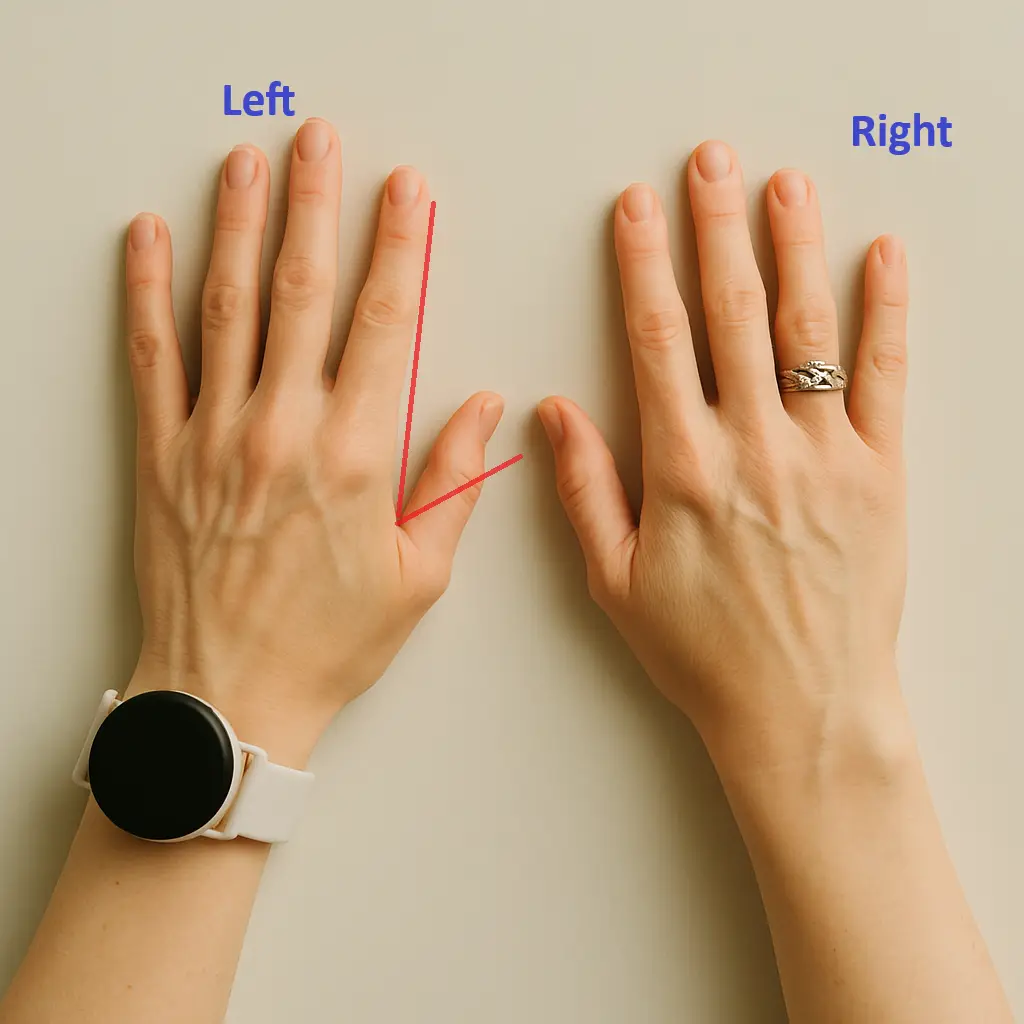
    At secondary school, I was bullied for tying my shoelaces “like a four-year-old.” It stung, but now I know it was never about ability — just a difference in how my brain and body communicate. I still mix up left and right, though I have my trick: I hold my hands out, palms down — my left one makes a little “L.” It’s simple, but it works. Even so, I sometimes set the table the wrong way round or walk confidently in the wrong direction. Without Google Maps, there’s a good chance I’ll end up facing the wrong way — even in a building I’ve been in before!

    Learning more about Living with Dyspraxia and Neurodiversity helped me realise that my struggles weren’t carelessness — they were part of how my brain works.


    Workplace Challenges

    At work, dyspraxia showed up in ways no one expected. When our process changed, we were suddenly required to photograph customer documents using webcams instead of scanners. Everyone else managed easily; I, however, couldn’t do it without shaking or dropping the camera out of frame. Trying to hold the webcam steady while pressing a laptop key felt like juggling and typing at the same time — not my strongest skill set!

    The harder I tried, the worse it got. My hands shook, my confidence crumbled, and eventually I ended up in tears — embarrassed, frustrated, and convinced I was failing at something everyone else found effortless.

    Once they gave me a document scanner with a stand, the problem disappeared overnight. Suddenly, my work became easier, the images were clearer, and everyone benefited. It was such a small change, but it made a huge difference — not just to me, but to accessibility for colleagues across the country.

    That moment also led to something positive. Alongside my PTSD therapy and the growing recognition of my potential neurodiverse traits, I was referred to our occupational health team. They recommended workplace screening and support through Lexxic, who specialise in helping adults with neurodivergent conditions such as Dyspraxia and Neurodiversity, ADHD, and dyslexia.

    That experience became a turning point in understanding how Living with Dyspraxia and Neurodiversity can affect even the smallest everyday tasks. With a formal screening from Lexxic and access to a neurodivergent coach from Genius Within, I finally had the opportunity to talk openly about how my brain works. For the first time, I began to see that the strategies I’d built over a lifetime weren’t failures or quirks — they were coping mechanisms that had helped me survive and succeed in a world not designed for me.

    From there, my understanding began to grow. I started engaging in more conversations around inclusion and accessibility and discovered the value of Employee Resource Groups (ERGs) — including one focused on neurodiversity and peer support. Knowing I wasn’t alone, and that others were beginning to recognise similar patterns in themselves, was genuinely life-changing. It helped me see that Living with Dyspraxia and Neurodiversity isn’t just about personal challenges — it’s also about connection, shared learning, and community.


    Seeing the World Through My Senses

    Dyspraxia isn’t just about movement; it often overlaps with sensory-processing differences. My brain filters sights, sounds, and textures differently from most people’s — and sometimes it doesn’t filter them at all.

    If a TV is on in the background, my attention locks onto it, even if it’s an irritating advert on repeat. I can’t tune it out. In crowds, voices merge into a wall of white noise, yet the quietest whisper — especially if it’s about me — cuts through like a knife. Living with Dyspraxia and Dyslexia, along with suspected ADHD and Autism, means the world can sometimes feel too loud, too bright, or too much.

    Over the years, I’ve learned small ways to cope: noise-cancelling headphones when I need calm, tinted backgrounds to help my eyes process text, soft lighting, and quiet corners whenever I can find them. These tiny adjustments help create a sense of balance in a world that often feels overwhelming.

    I also notice movement and rhythm more than faces. I often recognise people by how they walk or the sound of their footsteps rather than by facial features. It’s as if my brain catalogues patterns and motion instead of expressions. For years, I thought that meant I was bad with faces or names — maybe even unfriendly. Now I see it differently: it’s another way my Dyspraxia and Neurodiversity shape how I experience the world.


    What “Clumsy” Has Taught Me

    For me, Living with Dyspraxia and Neurodiversity — including Dyslexia, alongside suspected ADHD and Autism — means learning to embrace the way my brain and body connect: imperfect, but uniquely mine. It’s taught me patience and self-compassion, and helped me see that my so-called mistakes aren’t failures. They’re simply part of how my brain works — and often, part of what fuels my creativity.

    Over time, I’ve realised that my body’s quirks aren’t barriers; they’re teachers. They’ve pushed me to find new ways of problem-solving — to adapt, to build tools and systems, and to approach challenges with curiosity rather than criticism. Those same skills now shape how I work, learn, and live every day.

    More than anything, Living with Dyspraxia and Neurodiversity has deepened my empathy. I know what it feels like to struggle silently — to appear “fine” on the outside while juggling invisible challenges beneath the surface. It’s shown me that independence doesn’t mean doing everything perfectly or alone. Sometimes it means asking for the stand, the rail, or simply an extra minute — and knowing that doing so doesn’t make me less capable, just differently designed.

    In Part 1 I shared how I first began to understand my neurodivergence. In Part 3 I explore how sensory processing shapes my daily life — and how learning to work with my senses, instead of against them, is helping me rediscover balance.

  • Understanding My Neurodivergence Journey Part 1

    First published on myneurodivergentstory.blog

    Finding the Words for Who I Am

    For most of my life, I didn’t have the language to explain why things felt different for me. Why I could be both brilliant at something one moment and paralysed by the simplest task the next. Why noise, chaos, and expectations could drain me faster than anyone seemed to understand.

    Now, at 46, I’m waiting for formal diagnoses for ADHD and Autism. I’ve already completed screenings (not a formal diagnosis) for DCD (Developmental Coordination Disorder, Dyspraxia), Dyslexia, and ADHD — and I’m learning how much of my life makes sense through that lens.

    I’m also learning how much I’ve survived through sheer determination. Neurodiversity burnout, depression, trauma recovery — they’ve all been chapters of my story. But they’re not the whole story.


    Discovering My Differences

    It began by accident at university. A group of psychology students needed volunteers for their project. I signed up — and when they reviewed my results, one of them said:

    “Abi, did you know you’re dyslexic?”

    I didn’t.

    They showed me the results: a huge gap between my verbal and processing scores. That night, I phoned my parents — and my mum said something that changed everything:

    “Yes, we knew. Why do you think we played all those word games with you as a child? We also played catch to help with your dyspraxia.”

    Okay — but that didn’t really change much. Back in 2000, I was just someone who was considered difficult, who had already, in my very first week at Freshers’ Fair, come to blows with the halls of residence bursar (and that’s a story for another time!).

    So when I was asked if I wanted extra time in exams, I shrugged and said, “Why would I need that? I always finish before time’s up anyway.” Nobody explained what else might help or what the implications of dyslexia and dyspraxia really were. My parents said they’d taught me coping mechanisms so I could get through life — okay then, so I assumed I didn’t need anything else. Because that’s what it was like in the 1980s and 90s when I went through school.


    How It Changed in 2024

    Everything shifted during therapy in 2024. I had started trauma and PTSD counselling — my fifth round of therapy overall — and thought I was coping fairly well. Then, one day, my therapist said something that stopped me in my tracks:

    “What would you say if I said neurodivergence might be part of the mix here?”

    They couldn’t diagnose me, but they suggested I explore it — pointing me towards some YouTube channels and books. And suddenly, so much began to click into place. At that point, we were talking about DCD, Dyslexia, and ADHD.


    Reading on Hard Mode

    When the university found out, their only response was: “Do you need extra time in exams?” I remember thinking — what would be the point? I always finished early anyway. Extra minutes wouldn’t stop my brain from jumbling letters mid-sentence. So nothing changed.

    Fast forward to this year. During a conversation with my neurodiversity coach, I admitted that I’d never really had any practical help for my dyslexia. I didn’t even know where to start. She explained that some specialist opticians can test whether coloured filters make reading easier. That immediately caught my attention — I’d already noticed that certain colours or colour combinations made text almost impossible for me to read.

    I remembered being at school and asking teachers not to write in green, red, or orange on the board because, no matter where I sat, I couldn’t make out the words. I just assumed it was an eyesight problem, but no teacher or optician ever suggested there might be another explanation.

    With my coach’s guidance, I finally found an optometrist who offered colour screening. And that’s when everything changed. A simple green background stopped the words from vibrating. For the first time in my life, the page stayed still.

    It hit me then — I’d been reading on hard mode for over forty years without realising it.


    This post is Part 1 of my ongoing series, My Neurodivergent Story. In Part 2, I’ll talk about living with dyspraxia, sensory experiences, and how “clumsiness” became one of my biggest teachers.